


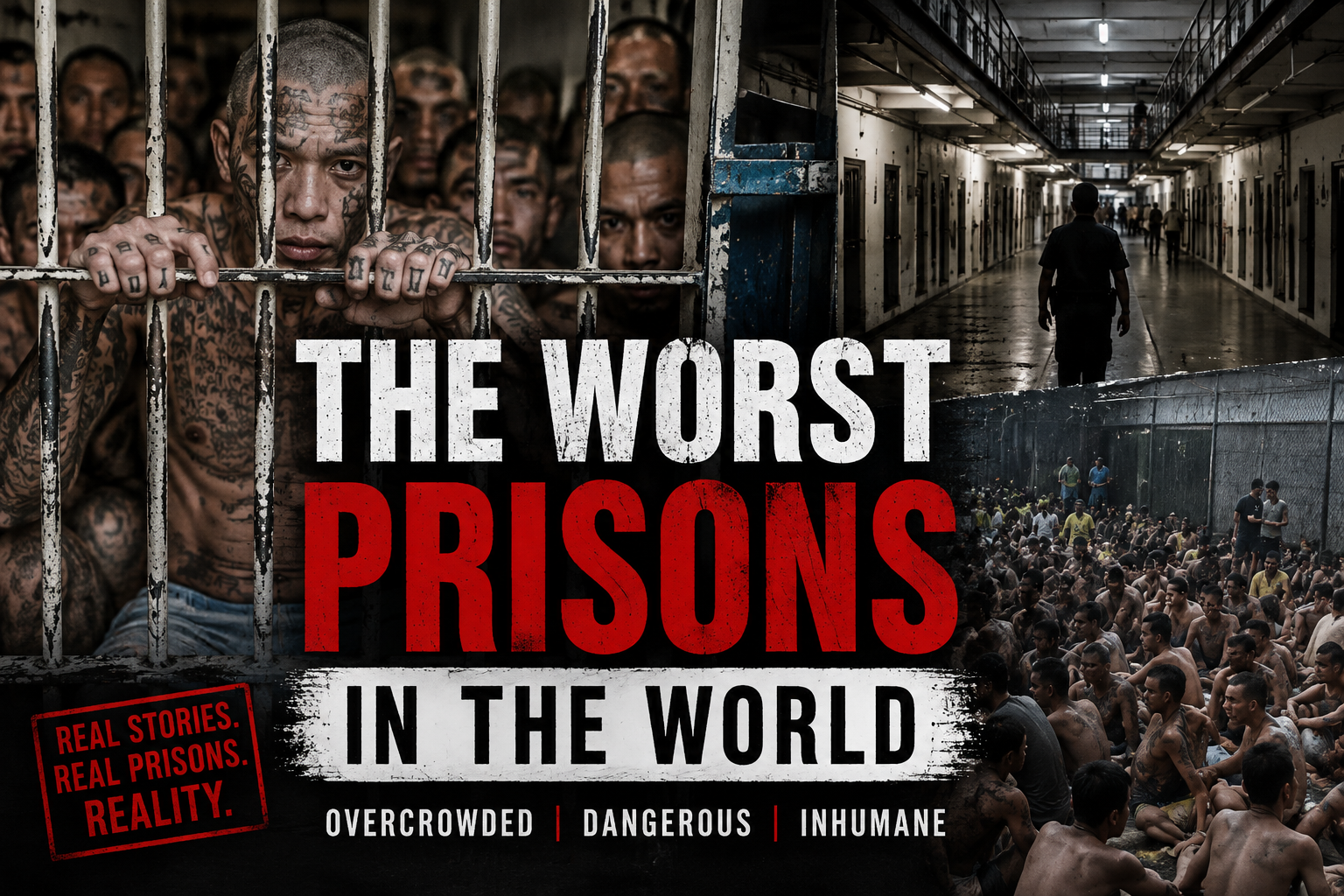
Prison is often described as a place where criminals are sent to pay for their crimes. But what happens when prisons themselves become overcrowded, unsafe, and almost impossible to control? The documentary The Worst Prisons in the World takes viewers inside some of the most difficult prison environments and reveals a side of the justice system that is rarely seen by ordinary people.
One of the most striking parts of the documentary is its look at prisons in the Philippines. In Quezon City, even children as young as ten have been held in extremely overcrowded and unsafe cells. The lack of space and basic resources creates an environment where prisoners have to live under constant pressure. Instead of simply being a place of punishment, the prison becomes a difficult environment where survival can sometimes become the most important concern.
The documentary also introduces prisoners from different countries and backgrounds. One European woman describes her experience inside an overcrowded prison, where she feels unsafe but still finds support from the people around her. Her story shows that prison life is not only about physical confinement. Loneliness, fear, uncertainty, and the need to adapt can have a major impact on a person’s mental state.
Another important theme is the lack of resources available to prisoners. Basic items can become extremely valuable, while prohibited objects and illegal substances can create additional risks. The documentary shows how difficult it can be for prison authorities to control everything that happens behind the walls.
The film also visits Fleury-Mérogis, one of the largest prisons in Europe. There, overcrowding and connections between inmates create serious challenges for prison management. Smuggling and illegal networks can make it even harder for authorities to maintain order.
What makes this documentary powerful is that it does not simply show prisoners as criminals. Instead, it encourages viewers to think about the conditions in which people are confined and whether those conditions actually help create safer societies.
Ultimately, The Worst Prisons in the World raises an important question: should prison only punish people, or should it also help them change? The documentary suggests that when prisons fail to provide safety, dignity, and opportunities for rehabilitation, punishment alone may not solve the deeper problems behind crime.